
Is Online Personal Training Worth It?
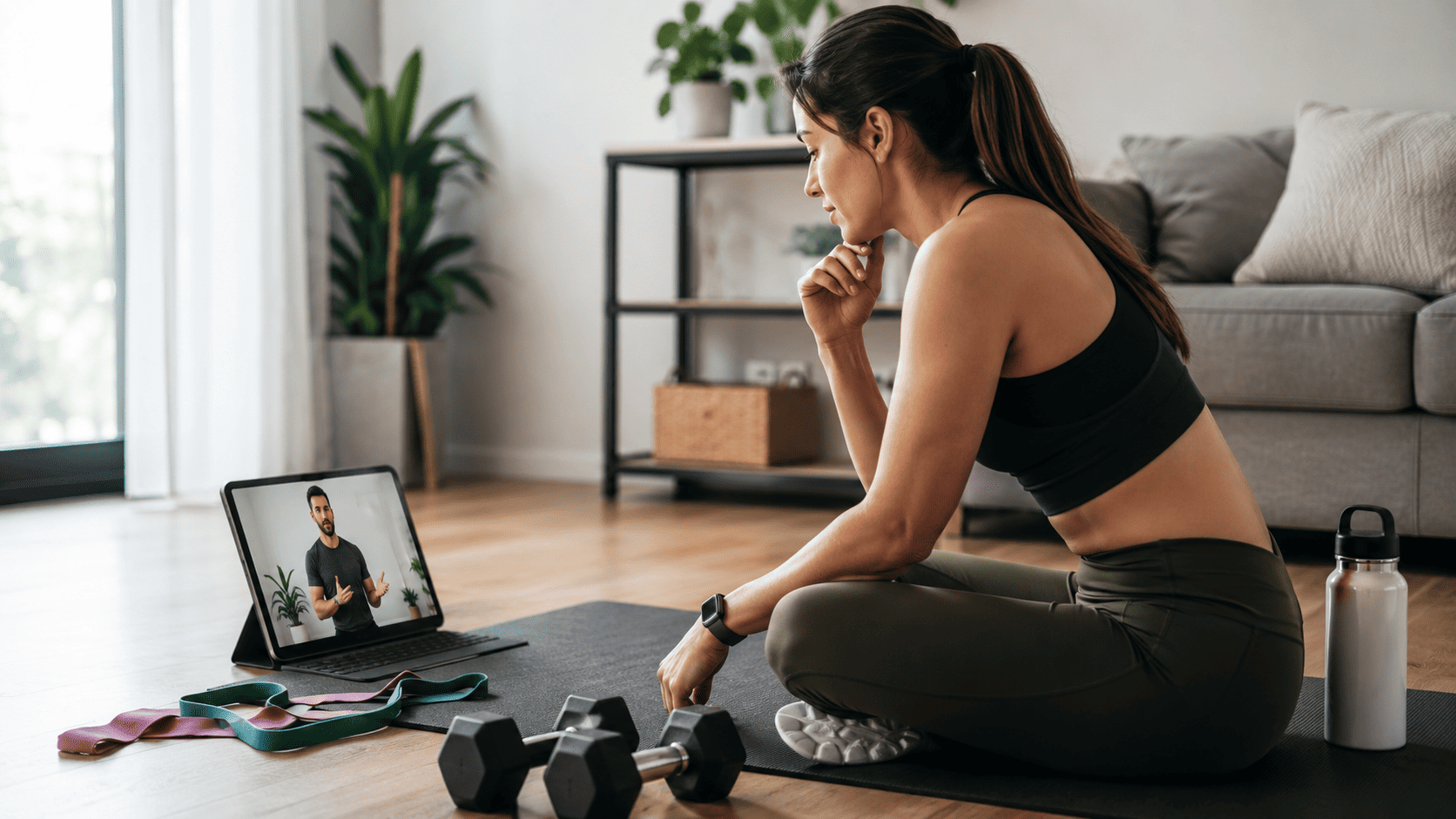
Online personal training has become one of the most searched questions in fitness, and for good reason. More people than ever are weighing the cost, the flexibility, and the results against what they've always known: a trainer standing next to them in the gym, watching every rep.
The honest answer is not a simple yes or no. It depends entirely on who you are, what you want, and what kind of support you actually need to get there. This guide cuts through the generic pros-and-cons lists and gives you a clear picture, so you can make the right decision for your goals.
What Is Online Personal Training?
Before deciding whether it's worth your time and money, it helps to understand what online personal training actually is, because there's a wide spectrum of what that term gets applied to.
At one end, you have app-based programs: algorithmically generated workout templates that swap your name into a pre-built plan. These are not personal training. They are glorified workout databases dressed up with subscription fees.
Real online personal training is something different. It's a coach-led experience delivered remotely. Your coach builds a program specifically for you, based on your goals, your training history, your schedule, your equipment, and your recovery capacity.
They review your sessions, give feedback, adjust the program as you progress, and stay in contact between workouts.
The delivery typically happens through platforms like TrueCoach or Trainerize, where your sessions live alongside notes, video demonstrations, and coach commentary. But the platform is just the vehicle. The coaching relationship is what makes it work.
Is Online Personal Training Actually Effective?
This is the question most people are really asking when they search this topic, and it deserves a direct answer.
Yes. Online personal training produces real, measurable results for the vast majority of people who follow through with it. The medium does not determine the outcome. The quality of the programming and the consistency of the coaching relationship do.
In fact, many coaches report that their online clients communicate more openly than their in-person clients. Without the social pressure of a face-to-face session, people are often more willing to ask questions, flag what isn't working, and share where they're struggling. That kind of honesty is what allows a coach to actually do their job.
The caveat is quality. A well-designed program delivered remotely beats a generic in-person program delivered by someone who isn't paying attention. But a disengaged online coach who sends you a PDF and disappears is not coaching. It's a transaction. Know the difference before you sign up.
The Real Benefits Of Online Personal Training
The benefits go beyond what most articles cover. Here is what actually matters.
Flexibility That Fits Around Your Life
One of the most underappreciated advantages of online training is that your schedule drives the program, not your trainer's calendar. You train when it works for you, whether that's early morning before the kids wake up, on lunch breaks, or late at night when the gym is quiet.
For professionals, parents, and athletes with complex schedules, this alone can be the difference between training consistently and not training at all.
Significant Cost Savings
In-person personal training typically costs $80 to $150 or more per session. If you're training two to three times per week, that adds up to $640 to $1,800 or more per month. Quality online coaching typically runs $100 to $300 per month flat, regardless of how many sessions you complete.
Online coaches don't carry gym overhead or need to split time between physically travelling between clients. Those savings pass directly to you, without any reduction in the personalization of what you receive.
Access To Specialist Coaches Regardless Of Where You Live
Your local gym has whoever is available. Online training has no such limitation.
If you're a climber in rural Colorado, you can work with a coach who understands the sport at depth. If you're a runner trying to add structured strength training without derailing your mileage, you can find someone who understands exactly how those two demands interact. Geography stops being a constraint. Expertise becomes the only filter.
Holistic Support That Goes Beyond The Workout
Quality online coaches don't just send you workouts. They look at the full picture: nutrition habits, sleep quality, recovery between sessions, and the mental side of training.
This 360-degree approach is where real long-term results come from. A one-hour in-person session twice a week leaves 166 hours of the week uncoached.
A great online coaching relationship fills in those gaps with check-ins, guidance, and adjustments that keep you moving in the right direction between sessions.
The coaching doesn't stop when the session ends — that ongoing contact is what separates a program that compounds from one that stalls.
More Communication, Not Less
This surprises most people. The assumption is that online training means less access to your coach. The reality is often the opposite.
With in-person training, your communication starts and stops at the gym door. With online coaching, your coach is reviewing your sessions, responding to messages, watching form videos, and checking in on your progress throughout the week.
Many athletes get more meaningful touchpoints with an online coach in a week than they would get from a twice-weekly in-person trainer who only engages during the hour you share a floor.
The Honest Downsides Of Online Personal Training
Any article that doesn't acknowledge the real limitations of online training is selling something. Here is where it genuinely falls short.
No Real-Time Form Correction
This is the most significant gap. An online coach cannot physically adjust your posture, cue your movement in the moment, or intervene if your technique breaks down during a heavy set. Video review helps, but there's an inherent delay.
For most experienced movers, this is manageable. For complete beginners learning foundational lifts like deadlifts, squats, or Olympic movements for the first time, real-time feedback matters in a way that asynchronous coaching cannot fully replicate.
You Have To Show Up On Your Own
Online coaching assumes you can get yourself to the gym. There's no appointment on the calendar that costs you money if you miss it, no trainer waiting at the squat rack. For athletes who are already self-motivated, this is not a problem. For those whose primary barrier is physically initiating the workout, the structural accountability of an in-person session may serve better.
Quality Varies Enormously
The barrier to calling yourself an online personal trainer is very low. A social media following and a Canva template is all it takes for some coaches to start selling programs. This means you need to vet credentials, experience, and communication style more carefully than you would with a certified trainer at an established facility.
The Credential Gap Is Real
Not all certifications are equal, and some coaches operating online have minimal formal education. Knowing what to look for, and what to ask, protects your investment and your body. The section on choosing a coach below covers this in detail.
Online Personal Training Vs. In-Person Training
This is the comparison most people are actually trying to make before they decide. Here is a direct look at both options across the factors that matter most.
Factor
Online Training
In-Person Training
Monthly Cost
$100 to $300 flat
$640 to $1,800+ (2 to 3x/week)
Schedule Flexibility
Train on your own schedule
Fixed appointment times
Real-Time Form Feedback
Asynchronous video review
Immediate, hands-on correction
Coach Access
Nationwide or global pool
Limited to local availability
Weekly Communication
Ongoing, multi-touchpoint
Primarily during sessions
Sport-Specific Expertise
Easily matched by goal
Depends on local availability
Accountability Structure
Program-driven plus check-ins
Physical appointment-based
Best Suited For
Self-starters, experienced movers, busy schedules
Beginners, complex rehab, low self-motivation
Neither option is universally better. The best choice is the one that fits how you actually live and train.
Who Online Personal Training Is Right For, And Who It Isn't
This is the question all those pros-and-cons lists forget to actually answer. Here is a clear framework.
It's A Strong Fit If You:
Already have basic gym experience and understand fundamental movement patterns
Have a schedule that makes fixed appointment times difficult or inconsistent
Want expert programming without the cost of in-person session rates
Are training for a specific goal, sport, or performance event
Value flexible communication and prefer to train on your own timeline
Have tried generic programs or apps and know you need something built specifically for you
It's Not The Right Fit If You:
Are a complete beginner who needs someone physically present to teach movement from scratch
Struggle significantly with self-motivation and need the social accountability of a scheduled appointment just to show up
Are managing a complex injury that requires hands-on assessment and real-time correction
The honest nuance worth noting: many people who believe they need in-person training simply need better online coaching. Not a template with their name on it, but a real program with a coach who checks in, explains the reasoning behind every session, and treats the relationship as ongoing rather than transactional.
What To Look For In An Online Personal Trainer
Choosing an online coach is a more deliberate process than walking into a gym and meeting whoever's on the floor. Here is what genuinely matters.
Verified Credentials And Education
Look for certifications from accredited organizations like NASM, NSCA, or ACSM. Coaches with backgrounds in health sciences, kinesiology, or related fields bring additional depth that shows up in how they approach programming and injury awareness.
Experience With Your Specific Goals Or Sport
A coach who has worked extensively with climbers understands the physical demands of the sport in a way a general trainer does not. The same applies to runners, endurance athletes, or anyone with a specific performance target. Ask who they've worked with and what those athletes achieved.
The gap between a general fitness program and training built around the actual demands of athletic performance is significant, and it becomes most visible when you're trying to improve at something with real technical complexity.
A Clear Communication Structure
How frequently will your coach check in? How do they deliver session feedback? What's the expected response time for questions? The answers tell you whether you're getting a coaching relationship or a content delivery service.
A Thorough Onboarding Process
A quality coach does not hand you a training plan on day one. They take time to understand your history, your movement background, your schedule, your equipment access, and your recovery patterns before building anything. If onboarding feels like filling out a basic intake form and getting a template back, that's a warning sign.
Transparent Pricing And Realistic Expectations
Be cautious of any coach who promises dramatic results in a short timeframe without knowing anything about you. A trustworthy coach will tell you how long progress realistically takes, what the program includes, what happens if things need to adjust, and what you're paying for and why.
Red Flags Worth Knowing Before You Commit
Some patterns signal a coach who is more interested in selling a subscription than delivering results.
No verifiable credentials or vague certifications from unrecognized organizations
Programs that feel interchangeable between clients
Minimal or non-existent feedback on completed sessions
Guaranteed results in timelines that don't reflect how training actually works
Communication that drops off after the initial signup
What Does Online Personal Training Actually Include?
This is one of the most commonly unanswered questions in this space. Most articles talk about benefits in the abstract. Here is what a week of quality online coaching actually looks like in practice.
Your training plan lives in a coaching platform where each session has a purpose, a structure, and clear instructions. Not "do some squats," but a specific protocol with loading, tempo, rest periods, and notes from your coach about what to focus on.
After each session, you log your work and your coach reviews it. They note what went well, what needs adjustment, and whether the plan needs to shift based on how your body is responding.
For key lifts or sport-specific movements, you submit video for form review. Your coach watches, gives specific technical feedback, and flags anything worth addressing before it becomes a pattern. For climbers especially, movement efficiency is a skill that degrades quietly without deliberate coaching attention, and video feedback is one of the most effective tools a remote coach has to accelerate that development.
Check-ins, whether weekly calls, voice messages, or structured questionnaires, keep the coaching relationship active between workouts. These touchpoints are where the real conversation happens: how recovery is going, how stress levels are affecting training, whether the program feels sustainable.
Nutrition guidance, mental performance support, and recovery planning round out the picture for programs that include these components. The goal is not to overwhelm you with information. It's to ensure that everything influencing your performance is being looked at, not just the hour you spend lifting.
How Much Does Online Personal Training Cost?
Pricing varies, but there are clear market ranges worth knowing.
In-person training runs $80 to $150 or more per session. Training twice a week with a quality in-person coach quickly becomes $640 to $1,200 per month before accounting for gym membership fees.
Online coaching typically runs $100 to $300 per month for a full program with ongoing coach access. Some entry-level programs sit lower; some highly specialized coaches with elite-level credentials sit higher.
Several factors influence where a coach falls within that range:
Their credentials, specialization, and experience level
How frequently they communicate and review sessions
Whether the program includes nutrition coaching, video analysis, and check-in calls
Whether you're committing month-to-month or to a longer development track
One thing worth understanding clearly: price does not equal quality. A $300 per month coach who reviews every session, provides weekly feedback, and has deep expertise in your sport may deliver significantly more value than a $150 per month coach who sends you a plan and checks in monthly.
For athletes who want structured programming without a full ongoing coaching commitment, a focused 6-week plan sits at a different price point than subscription-based coaching for a reason, and understanding that distinction helps you match the right service to where you actually are in your training.
How Long Does It Take To See Results With Online Training?
Realistic expectations make the difference between athletes who stay the course and those who quit before the program has had time to work.
Most coaches recommend committing a minimum of 90 days before making any serious evaluation of whether a program is working. That's not because results take three months to appear, but because the early weeks are about building habits, calibrating the program to your body, and establishing a rhythm that's sustainable.
Most athletes significantly underestimate how much faster consistent output at a deliberate effort level compounds compared to sporadic maximum intensity, and that principle holds whether you're a climber, a runner, or someone returning to training after a long break.
In practice, here's what progress typically looks like across a coaching timeline:
Weeks 1 to 6: Improved consistency, better sleep, more energy during training, and a clearer sense of direction
Weeks 8 to 12: Measurable strength gains, improved movement quality, and visible shifts in body composition for those with those goals
90-plus days: Meaningful performance improvements, sport-specific development, and a training identity that holds up under life's pressure
Six to twelve months: Long-term athletic development, sustained performance, and the kind of progress that changes how you see yourself as an athlete
The athletes who get the most out of online coaching are not necessarily the ones who train the hardest in the first month. They're the ones who show up consistently, communicate honestly with their coach, and trust the process long enough for it to compound.
Is Online Personal Training Right For Athletes And Sport-Specific Goals?
This is where online coaching has a genuine advantage that almost nobody talks about, and it's directly relevant to athletes training for climbing, running, endurance sports, or any pursuit with specific physical demands.
Working with a specialist online means you're not limited to whoever happens to be certified at your local facility. A climber in a mid-sized city may have zero access to a coach who understands climbing-specific strength demands, movement quality on the wall, periodization around outdoor seasons, or the balance between climbing volume and supplemental training. Online coaching eliminates that barrier entirely.
For sport-focused athletes, a quality program integrates everything that actually moves performance forward. Strength and conditioning built around your sport rather than a generic fitness template.
Periodization that respects your training seasons and project goals. Supplemental work that supports performance without competing with it. And mental performance support for athletes dealing with fear, pressure, or the psychology of hard goals.
That last piece matters more than most coaching content acknowledges. Training in a public environment without any support for the self-consciousness that comes with it is one of the quietest performance limiters in climbing, and it rarely gets addressed unless a coach is specifically looking for it.
The same goes for the difference between attempting a hard project and actually working through one with a structured process.
For climbers specifically, the supplemental training questions are often the hardest to answer without a specialist. Whether lifting weights actually helps climbing performance comes down entirely to how that training is integrated, not whether it's done.
Understanding which upper body adaptations transfer to the wall and the meaningful difference between loading your fingers and actually training them safely are the kinds of distinctions that only matter when someone is coaching with a climbing-specific lens.
The climber working through a grade plateau, the runner adding strength without losing mileage, the athlete chasing a specific performance goal with a real deadline: these are exactly the people who benefit most from coaching that is specialized and remote, because they need someone who already knows the terrain they're trying to cross.
For climbers, that starts with a program built entirely around the demands of the sport, from movement and strength to seasonal periodization.
How Ascend Approaches Online Personal Training
Ascend was built around this specific problem. Not everyone has access to a specialist coach nearby. Not every athlete wants to show up at a fixed time twice a week. And not every fitness goal fits neatly into what a local gym happens to offer.
Founded in Colorado by Dillon Lundy, a NASM-certified Personal Trainer, Performance Enhancement Specialist, and Sports Nutrition Coach with over a decade of background in critical care nursing, Ascend brings a level of precision to coaching that goes beyond standard programming.
Dillon's approach is grounded in how bodies actually adapt: not just in the gym, but across sleep, nutrition, recovery, and the mental demands of consistent training. How that background shaped what Ascend is and who it's built for is worth understanding before you decide whether it's the right fit.
Alongside Dillon, Dan Mirsky serves as Ascend's Lead Coach and Climbing Specialist. Dan has spent over 20 years pursuing excellence in rock climbing, with nearly 100 route redpoints from 5.14A to 5.15A. He brings more than a decade of coaching experience helping climbers at all levels unlock performance they didn't think was possible.
Ascend's coaching is built on three core commitments.
Individualization over templates. Every athlete starts with a consultation. Goals, training history, schedule, equipment, movement patterns, and recovery demands shape the program from the ground up. Nothing is generic.
Coaching that lives outside the workout. Through TrueCoach, athletes receive session-by-session feedback, video analysis, monthly check-in calls, and nutrition coaching as part of the core program. The coaching relationship doesn't pause between sessions.
Long-term development over quick wins. Whether you're a dedicated rock climber working through a plateau, a general athlete building a stronger foundation, or someone returning to structured training after time away, the focus is on progress that holds. Not the fastest path, but the right one.
Every new athlete starts with a free 15 to 30 minute consultation: a real conversation about your goals, your background, and whether Ascend is genuinely the right next step.
Frequently Asked Questions
Is online personal training as effective as in-person training?
For most people and most goals, yes. Research and coaching experience consistently show that online training produces results comparable to in-person training when the programming is personalized and the coach is actively engaged. The medium matters far less than the quality of the program and the consistency of the coaching relationship.
How much does online personal training cost per month?
Most quality online coaching programs run $100 to $300 per month, depending on the level of support, the coach's specialization, and the commitment structure. That compares to $80 to $150 or more per session for in-person training, making online coaching significantly more accessible without sacrificing personalization.
What do you get with online personal training?
A quality program includes a custom training plan, regular session feedback, video form review, check-in calls or messages, nutrition guidance, and a program that evolves as you progress. You're getting a coaching relationship, not just workouts.
Is online personal training good for beginners?
It depends on the beginner. Those who are gym-comfortable but lack structured direction benefit greatly. Complete beginners who need hands-on movement coaching and real-time correction to stay safe may benefit more from starting with in-person training first, then transitioning to online coaching once foundational competence is established.
How long does it take to see results with online personal training?
Most coaches recommend committing to at least 90 days before making a serious assessment of results. Early improvements in energy, consistency, and sleep often appear in the first four to six weeks. Meaningful strength and body composition changes typically become clear at the eight to twelve week mark.
What should I look for in an online personal trainer?
Verified credentials from accredited organizations, experience with your specific goals or sport, a clear communication structure, a thorough onboarding process, and transparent pricing. The biggest red flags are generic programs, vague certifications, and coaches who go quiet after signup.
What is the difference between online personal training and an app-based program?
An app-based program is typically a generic template, possibly filtered by your inputs, but not designed by a real coach who knows you. Online personal training involves an actual coach building, monitoring, and adjusting your program based on your specific progress, feedback, and changing needs over time.
Can online training work for sport-specific goals like climbing or running?
Yes, and this is one of online coaching's strongest advantages. You can work with coaches who specialize in your sport regardless of where you live. A climber can find a coach who understands the specific demands of the sport; a runner or strength-focused athlete can find programming built around their exact performance needs. The more specific your goal, the more the right coach matters, and geography no longer limits who that can be.
The Bottom Line
Online personal training is worth it when the coaching is real. When someone is actually building your program around your life, reviewing your sessions, adjusting the plan as you evolve, and staying present in the relationship between workouts.
It is not worth it when it's a template with your name on it, a coach who goes quiet after month one, or a program that looks exactly like what every other client gets.
The right fit is out there. The question is asking the right questions before you commit and knowing what quality actually looks like. If you've found this guide useful and want to see whether Ascend is that fit for you, the free consultation is the most direct way to find out.
