
What Is Endurance Training In Climbing?
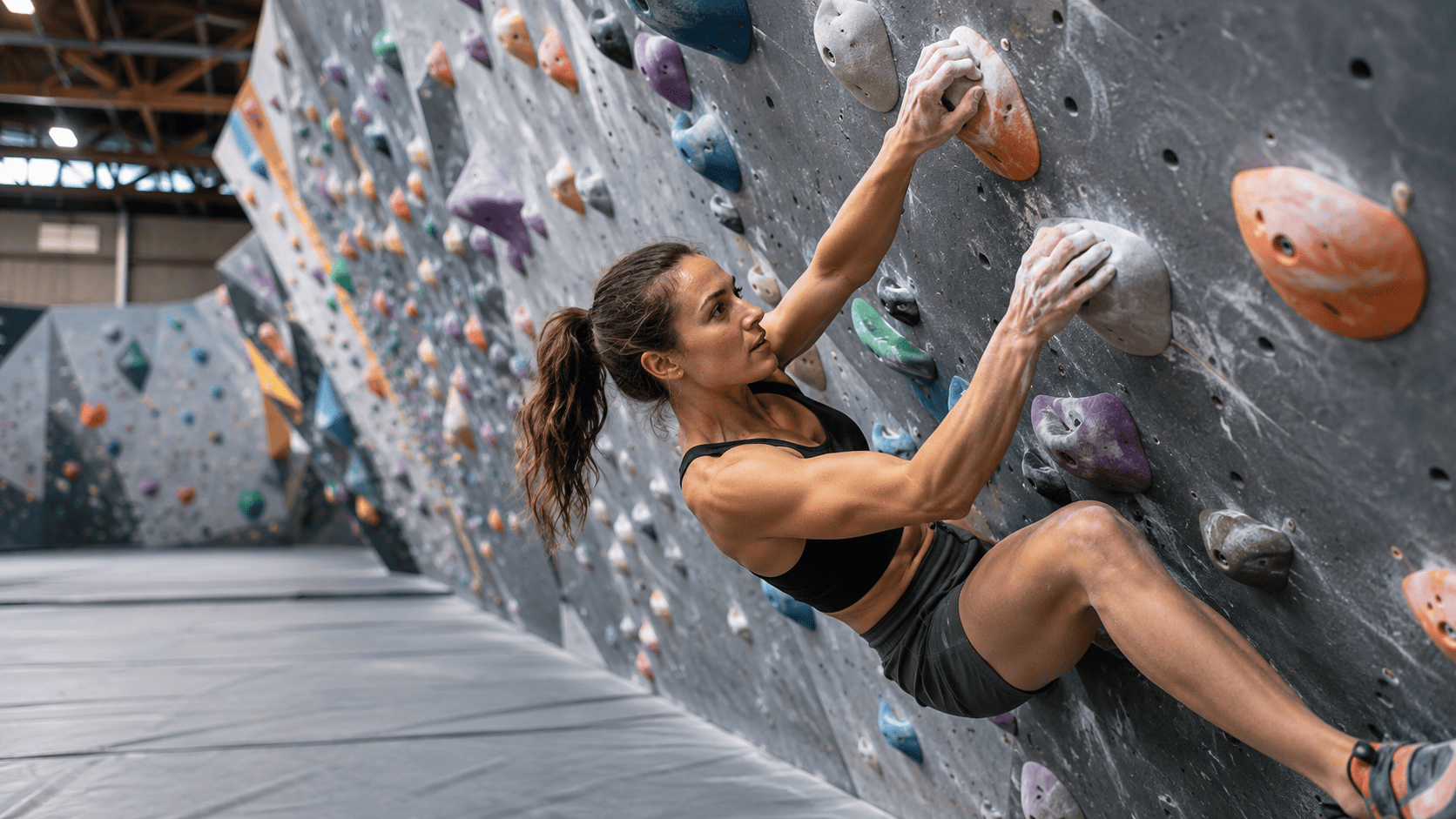
A lot of climbers think endurance training simply means getting pumped and trying to survive it. That is part of the picture, but it is not the full story. Good endurance training is not about turning every session into a sufferfest. It is about building the specific ability to keep moving well, manage fatigue, recover on the wall, and stay effective longer.
In climbing, endurance matters because the sport rarely rewards strength alone. You might be powerful enough to do the crux, but if you arrive there already cooked, it does not matter. Endurance is what lets you link more moves, stay composed through longer sequences, and keep enough capacity in reserve to execute when it counts.
The key is understanding that endurance is not one single quality. There is base aerobic capacity, there is route endurance, and there is power-endurance. Each one serves a different purpose, and each one should be trained with intention.
What Endurance Actually Means In Climbing
Endurance in climbing is your ability to sustain effort on the wall without falling apart physically or mentally. Most climbers feel this most clearly in the forearms.
When the pump rises, grip starts to fade, movement gets less precise, and breathing gets tighter. Endurance training helps delay that point and improves your ability to keep climbing well as fatigue builds.
That is why endurance is not just about lasting longer. It is also about staying efficient longer. A climber with better endurance does not just hang on longer for the sake of it. They recover better on rests, make cleaner decisions later in the route, and keep their technique from collapsing when the forearms start talking.
In practical terms, endurance helps you link sections, shake out with purpose, clip without panic, and hold movement quality deeper into the effort. For sport climbers, trad climbers, and even many boulderers, that can be a major performance difference.
Why “Getting Pumped” Is Not The Same As Training Endurance
This is where a lot of climbers get stuck. They do a random high-volume session, get pumped, and assume they trained endurance. Sometimes they did. Often they just accumulated fatigue without giving the body a clear reason to adapt in a specific way.
Good endurance training has a target. It asks whether you are trying to improve base aerobic capacity, your ability to stay composed through a long route, or your ability to repeat hard efforts with incomplete recovery. Those are related qualities, but they are not identical. The session should reflect the goal.
That is why random pump sessions can become a dead zone. Too hard to be true aerobic work, too unfocused to be quality power-endurance, and too inconsistent to build reliable progress. Purpose matters. When endurance training becomes structured, it stops being just hard and starts being useful.
The Main Types Of Endurance In Climbing
Climbing endurance is easiest to understand when you break it into categories. Once you do that, training choices get much clearer.
Aerobic Capacity
Aerobic capacity is your base. It is the lower-intensity endurance that supports longer efforts, better forearm recovery, and improved ability to keep climbing without constant redlining. This is the kind of endurance that helps you stay relaxed on easier terrain, shake out more effectively, and recover between harder sections.
For climbers, aerobic work often shows up as easier but longer sessions, controlled continuous climbing, or ARC-style training. It is not supposed to feel desperate. It should feel sustainable, rhythmic, and repeatable.
Route Endurance
Route endurance sits a little more in the middle. It is your ability to keep performing through an entire climb or a long section of climbing without losing control. This includes clipping under fatigue, making decisions while tired, and holding movement quality through sustained sequences.
This is especially important for sport climbing, indoor lead climbing, and any style where the route is long enough that pure strength alone will not carry you through. Route endurance helps you stay functional when the effort keeps going.
Power-Endurance
Power-endurance is what you need when the climbing stays hard and the recovery is limited. Think steep sport routes with multiple bouldery sections, long indoor routes with few real rests, or extended boulder circuits where you have to keep producing high output while already tired.
This is where workouts like 4x4s, linked boulders, and harder intervals tend to fit. Power-endurance is not the same as base endurance. It is more intense, more specific to repeated hard efforts, and usually more fatiguing.
Which Type Of Endurance Do You Actually Need?
The answer depends on how you climb and what you are trying to improve. Not every climber needs the same endurance profile, and not every weakness is solved by adding more pump sessions.
For sport climbers, the answer is usually a mix. Aerobic capacity matters because it improves recovery on the wall and supports longer sessions. Route endurance matters because routes demand sustained effort. Power-endurance matters when the climbing includes repeated hard sections with limited rests.
For boulderers, pure endurance is usually less important, but it still has value. Better aerobic support can improve session quality, help you recover faster between attempts, and raise your overall work capacity. Power-endurance matters more when the problems are long, steep, or require repeated hard efforts.
For trad and multipitch climbers, base endurance and sustained climbing capacity become even more important. Long days, bigger volume, and the need to stay composed for extended periods all reward a stronger aerobic foundation.
The Most Common Endurance Training Methods
There are several good ways to build endurance in climbing. The best method depends on the goal, your current level, and the type of climbing you care about most.
ARC Training
ARC training is one of the classic aerobic methods for climbers. It usually involves climbing continuously at a low enough intensity that you stay below a deep pump. The goal is not to fight for your life. The goal is to keep moving for an extended period while staying relaxed enough to maintain the effort.
This kind of work helps build your base. It teaches you to settle into movement, control grip tension, and keep blood flowing through the forearms. It is not glamorous, but it is effective when used consistently.
Short And Long Intervals
Intervals give you a more structured way to target climbing endurance. Shorter intervals can help build controlled pump tolerance while maintaining repeatability. Longer intervals can make the session feel more route-specific and help you work on staying composed deeper into sustained efforts.
These are useful because they let you regulate intensity and rest more precisely. Instead of just climbing until things fall apart, you can build the exact rhythm that matches your goal.
Continuous Climbing And Route Mileage
Sometimes the simplest answer is still a good one. Easy mileage, linked routes, autobelay volume, top-rope laps, or long traverses can all build useful endurance if the intensity is chosen well. This is especially effective for climbers who need more time on the wall and more comfort moving under manageable fatigue.
Mileage also gives you something many climbers need more of: practice climbing well while a little tired. That has real transfer, especially for route climbers.
4x4s And Power-Endurance Circuits
4x4s and similar circuits are usually better thought of as power-endurance training rather than basic endurance. They are harder, more intense, and more demanding on recovery. When used well, they can be excellent for climbers preparing for steep routes, indoor comps, or long boulder sequences.
The mistake is treating these as the answer to everything. They are useful, but they are not a substitute for base aerobic work or for learning to pace sustained climbing.
What Endurance Training Should Feel Like
This is one of the most important pieces to understand. Good endurance training should not always feel like total failure. Different sessions should feel different depending on the target.
Aerobic endurance work should usually feel controlled. You should be able to keep moving, manage your breathing, and avoid spiraling into a deep, irreversible pump. If you are completely boxed halfway through, the session is probably too hard for that purpose.
Power-endurance sessions are different. They should feel harder, more demanding, and closer to your limit, but even there, quality still matters. You want to be challenged, not just reduced to flailing. The goal is to train useful fatigue, not sloppy survival.
How To Fit Endurance Training Into A Real Climbing Week
This is where smart programming matters. A lot of climbers add endurance sessions on top of everything else and then wonder why they feel flat. Endurance work still creates fatigue, and if it is poorly placed, it can interfere with strength, power, and high-quality climbing.
Beginners usually do not need a huge amount of formal endurance work. Easier mileage, more total climbing, and longer sessions at manageable intensity are often enough. The goal is to build a base without overcomplicating it.
Intermediate climbers often benefit from one or two endurance-focused sessions each week, depending on the season and the goal. These sessions should fit around harder climbing days so that quality stays high where it matters most.
Advanced climbers need more precise timing. Endurance should be trained according to phase, objective, and the demands of current projects. Sometimes it is the focus. Sometimes it is maintained in the background while strength or power takes priority.
Common Mistakes In Endurance Training
One of the biggest mistakes is training too hard all the time. When every endurance session turns into a battle, the quality of the work usually drops. Climbers start overgripping, moving poorly, and reinforcing the exact patterns they should be trying to improve.
Another mistake is choosing the wrong method for the goal. A climber who needs a better aerobic base will not always get it from endless 4x4s. A climber who needs to survive hard sequences late in a route may not get enough from easy mileage alone.
There is also the problem of ignoring movement quality. Endurance is not only about energy systems. It is also about climbing efficiently under fatigue. If technique falls apart every time you get tired, that needs attention too.
How Ascend Builds Endurance For Real Climbers
At Ascend, endurance is not treated as random volume or pump for the sake of pump. It is built around the athlete, the goal, and the style of climbing that matters most. Our coaching process looks at what kind of endurance is actually needed, where the current limiter is, and how to fit that work into a realistic week.
That is especially important for everyday athletes balancing climbing with work, life, and recovery. Through Ascend’s Rock Climbing Coaching Program, climbers get structured training, session feedback, and a long-term plan designed around real progress rather than guesswork. When endurance is programmed well, it does more than help you stay on the wall longer. It supports better pacing, better movement, and more confident performance when the route starts to ask real questions.
How Long Does It Take To Build Climbing Endurance?
Endurance usually improves faster than maximal strength, but it also depends heavily on consistency. A few good sessions can make you feel sharper, but meaningful improvements come from steady work over time. The body responds well when endurance training is repeated often enough to matter without becoming so frequent that recovery suffers.
That is why small, consistent exposure works better than occasional big efforts. If you train the right quality regularly and keep the sessions specific, the gains tend to come in a way that feels useful on the wall.
FAQs
What Is Endurance Training In Climbing?
It is training designed to help climbers sustain effort longer, manage pump better, recover on the wall, and keep movement quality under fatigue.
What Is The Difference Between Endurance And Power-Endurance?
Endurance is broader and often includes lower-intensity, longer-duration climbing. Power-endurance is more about repeated hard efforts with limited recovery.
What Is ARC Training In Climbing?
ARC training is low-intensity continuous climbing used to build aerobic capacity and improve forearm recovery.
Are 4x4s Endurance Or Power-Endurance?
Most of the time, 4x4s are better classified as power-endurance because they involve repeated hard efforts under fatigue.
How Often Should Climbers Train Endurance?
That depends on level and goal, but many climbers do well with one or two focused endurance sessions each week alongside regular climbing.
Can Boulderers Benefit From Endurance Training?
Yes. Even if pure endurance is not the main limiter, better aerobic support and power-endurance can improve session quality and performance on longer problems.
How Do You Train Climbing Endurance At Home?
Home options include traversing circuits, hangboard interval variations, foot-on campusing, and other controlled time-on-task methods, depending on your setup.
What Should Endurance Training Feel Like?
It should match the goal. Aerobic work should feel controlled and sustainable. Power-endurance work should feel harder, but still organized enough that movement quality stays intact.
