
Training Climbing Strength With Pull-Ups
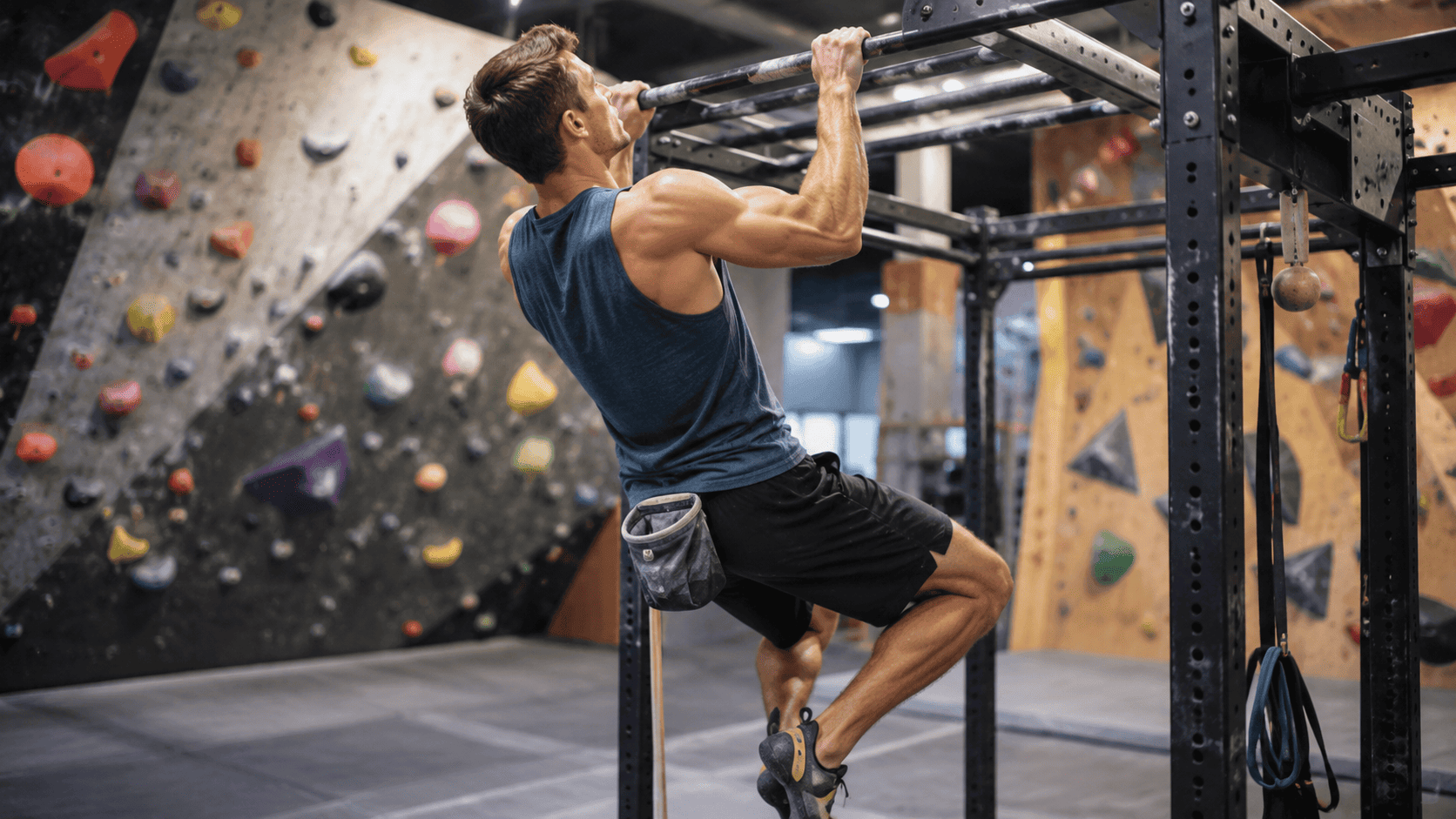
Pull-ups matter in climbing, but not in the shallow way people often talk about them. Being able to knock out random reps on a bar does not automatically make you a stronger climber. What matters is whether your pulling strength actually transfers to the wall, to steep terrain, to lock-offs, to body tension, and to staying connected when the movement gets hard.
That is where a lot of climbers go wrong. They either dismiss pull-ups entirely because climbing is “more specific,” or they chase pull-up numbers without thinking about how the exercise fits into the bigger picture. The truth sits in the middle.
Pull-ups can be a valuable strength tool for climbers when they are done with good mechanics, progressed intelligently, and placed properly within a climbing week.
If you already climb regularly, pull-ups should not replace time on the wall. They should support it. Used well, they help build the kind of upper-body strength that makes hard movement feel more controlled, more stable, and more repeatable.
Why Pull-Ups Matter For Climbers
Climbing is not just about hanging on. It is about creating and maintaining position. Pull-ups help develop the strength needed to pull your body in, keep tension through the shoulders and trunk, and hold yourself close to the wall while you move.
That has real value on overhangs, roofs, lock-off-intensive sequences, and steep boulders where the ability to stay tight can be the difference between sticking the move and swinging off.
Pull-ups also build scapular control, which matters more than most climbers realize. If your shoulders are loose and passive, you leak force. If they are active and organized, you move with more authority.
Still, pull-ups are only one piece of climbing strength. Finger strength, technique, footwork, mobility, and route reading all matter. Strong pull-ups without climbing skill do not lead very far. But when a solid climber adds the right pull-up work, the results often show up fast.
When Pull-Ups Matter Most In Climbing
Not every climber needs the same amount of pull-up work. Like any training tool, the value depends on the athlete, the level, and the current weakness.
Beginners
For newer climbers, the priority is usually climbing itself. Movement quality, footwork, body positioning, and general exposure to different angles and holds will often improve performance faster than a heavy focus on pull-up strength. If a beginner cannot yet do a strict pull-up, that is not automatically a problem.
That said, basic pulling strength still matters. Assisted pull-ups, negatives, scapular pull-ups, and simple holds at the bar can build a strong foundation without taking over the program. The goal is not to become a gymnastic specialist. It is to develop enough pulling ability that climbing positions start to feel more stable and less fatiguing.
Intermediate Climbers
This is where pull-ups often start to matter more. Many intermediate climbers have enough movement skill to recognize when raw pulling strength is actually limiting them. They can get into the position, but they cannot hold it strongly enough to reach through the next move or stay composed under tension.
At this level, structured pull-up work can be a very effective addition. Weighted pull-ups, lock-offs, and controlled volume work can all help build a stronger pulling base that transfers well to harder terrain. For many climbers, this is the sweet spot where pull-up training makes the most obvious difference.
Advanced Climbers
For stronger climbers, pull-ups are still useful, but the role becomes more specific. By this point, the athlete often already has decent pulling strength, so simply doing more bodyweight reps is not usually the answer. The value comes from targeted work that matches the demands of current projects or current weaknesses.
This might mean maximal weighted pull-ups, angle-specific lock-offs, or power-focused variations for dynamic climbing. At higher levels, the question is less about whether pull-ups matter and more about which version matters most right now.
Pull-Up Technique That Transfers To Climbing
The best pull-up for climbing is not the one that looks the most dramatic. It is the one that teaches you to create tension from the hands through the shoulders and trunk without wasting motion.
Start from an active hang, not a dead passive collapse. The shoulders should feel engaged, the core should stay on, and the body should remain controlled rather than loose and swinging. From there, pull with intention, keep the ribcage and pelvis connected, and finish the rep without craning or jerking.
The lowering phase matters too. In climbing, you are constantly controlling force, not just producing it. A clean descent builds strength through the full range and reinforces better shoulder mechanics. That is far more useful than bouncing through sloppy reps just to inflate the count.
The Best Pull-Up Variations For Climbers
Different pull-up variations train different qualities. Good programming comes from knowing what you are trying to build instead of defaulting to whatever feels hardest.
Standard Pull-Ups
The standard pull-up is still the foundation. For most climbers, a strict overhand pull-up with full control is the best place to start. It builds general pulling strength, shoulder engagement, and body awareness without unnecessary complexity.
If your standard pull-up is not clean yet, there is no need to rush into advanced variations. Better quality on the basic movement usually delivers more than a long list of flashy progressions.
Weighted Pull-Ups
Once you can perform solid bodyweight pull-ups with control, adding weight becomes one of the best ways to build maximal pulling strength. This is especially useful for climbers who want better strength on steep terrain or stronger lock-offs on demanding sequences.
Weighted pull-ups also help keep the training focused. Instead of endless high-rep sets, you can work in lower rep ranges with clearer intent. That often fits climbing better, especially for athletes chasing strength rather than general fatigue.
Lock-Offs
Lock-offs are one of the most climbing-specific ways to use pull-ups. Climbing often requires you to stop at a certain angle, hold tension, and move from there. That is very different from simply pulling up and down in one continuous path.
Training lock-offs at angles like 90 degrees or slightly more open positions can build the isometric strength needed to stay controlled while reaching or adjusting body position. For many climbers, this is one of the highest-transfer additions they can make.
Negatives
Negatives are a great option for climbers who cannot yet do many strict reps or who want to build more control through the lowering phase. Starting from the top and descending slowly teaches tension, shoulder stability, and awareness without needing a full concentric pull.
They are also useful for plateaus. If your full pull-ups have stalled, negatives can help build strength in a slightly different way while cleaning up weak spots in the pattern.
Power Pull-Ups And Frenchies
Power pull-ups can help climbers who need more explosive pulling for dynamic movement, but they should come after a good strength base is already in place. Without that base, explosive work often turns into messy work.
Frenchies are useful as a climbing-specific accessory because they combine pulling with isometric control at multiple positions. They are not the main lift for most athletes, but they can be a strong secondary tool for improving lock-off endurance and positional strength.
Which Pull-Up Grip Is Best For Climbers?
There is no single perfect grip for every climber, but some options make more sense than others depending on the goal.
A standard pronated grip is usually the best default. It has strong transfer to general climbing pulling patterns and gives most athletes a solid base for long-term progression. A neutral grip can be a good option for climbers whose shoulders or elbows feel irritated, since it is often a little more forgiving on the joints.
Wider grips can have some value, but wider is not automatically better. Many climbers force a very wide grip thinking it is more advanced, when in reality it just shortens the range and changes the mechanics without adding much useful transfer. Use it with purpose, not ego.
For most climbers, a straight bar works well. Climbing-specific handles or jugs can also be useful, especially if you want a slightly more familiar hand position. What is usually not worth it is doing pull-ups on tiny edges. That tends to turn the exercise into a finger-strength challenge and muddles the original goal.
How To Progress Pull-Up Strength
Good progression is simple, but it requires patience. If you cannot yet do a strict pull-up, start with negatives, assisted reps, scapular pull-ups, and brief isometric holds. Build ownership of the pattern before chasing full volume.
If you can do a few clean reps, focus on improving quality and total useful volume. That might mean adding an extra rep, cleaning up the tempo, or improving control at the top and bottom. Do not underestimate how much strength comes from simply making the same movement better.
Once you can do around eight to ten controlled bodyweight reps, it usually makes sense to shift toward weighted work. That is often the point where adding more reps stops being the best route to better climbing strength. Heavier, lower-rep work becomes more productive.
How To Fit Pull-Ups Into A Real Climbing Week
This is where many climbers make their biggest mistakes. They add pull-up work on top of everything else without considering what the rest of the week already demands. The result is tired elbows, flat sessions, and strength work that never gets enough recovery to actually improve.
For many climbers, pull-ups fit well after climbing sessions, especially if the goal is general strength development. The main climbing stays first, and the strength work supports it without stealing too much freshness. For others, especially athletes focusing more intentionally on pulling strength, a separate strength day may be the better option.
Home training can work well too. A pull-up bar gives you enough to build real progress if the programming is smart. You do not need endless volume at home. A few focused sets of strict pull-ups, lock-offs, negatives, or weighted work can go a long way when done consistently.
Common Pull-Up Mistakes Climbers Make
The first mistake is using momentum. Swinging, kipping, and chasing reps with poor form reduce the training value for most climbers. They make the set look more impressive while teaching less useful strength.
The second mistake is training passive shoulders. If you collapse into the bottom and hang on the joints, you reinforce the opposite of what most climbers need. Pull-ups should teach active control, not lazy hanging between reps.
The third mistake is overdoing volume. More is not always better, especially when climbing is already providing a large pulling load. Stronger climbers often improve more from focused, lower-volume work than from turning every week into an upper-body endurance contest.
Pull-Ups And The Bigger Climbing Picture
Pull-ups are valuable, but they are still just one part of better climbing. They work best when they support finger strength, movement skill, mobility, and time on the wall. They are not a shortcut around climbing practice, and they are not a complete replacement for sport-specific strength.
At Ascend, we coach pull-ups the same way we coach every other training quality: with purpose. That means choosing the right variation for the athlete, placing it where it fits in the week, and making sure it serves the bigger goal of better climbing.
Ascend’s coaching and training programs are built for climbers and everyday athletes who want that kind of structure. Instead of guessing how to combine climbing, strength work, and recovery, athletes get a plan that matches their level, schedule, and performance goals.
Done right, pull-ups can help you move with more control, hold harder positions, and feel stronger on the wall. But the best results come when the exercise is part of a smart system, not just another thing added to an already crowded week.
FAQs
Are Pull-Ups Good For Climbing?
Yes, when they are trained in a way that supports climbing. Pull-ups help build upper-body pulling strength, shoulder engagement, and core tension, all of which can transfer well to climbing.
Do Weighted Pull-Ups Help Climbers?
Yes. Once a climber has a solid base of strict bodyweight reps, weighted pull-ups are one of the best ways to build maximal pulling strength.
Should Climbers Do Pull-Ups Before Or After Climbing?
For many climbers, pull-ups fit best after climbing so the main session stays the priority. More focused strength work can also be placed on a separate day if needed.
What Grip Is Best For Climber Pull-Ups?
A pronated grip is usually the best default. Neutral grip can also work well, especially for athletes managing shoulder or elbow stress.
Are Frenchies Good For Climbing Strength?
They can be useful for building lock-off endurance and positional control. They work best as an accessory rather than the main pulling exercise.
Can I Train Climbing Pull-Up Strength At Home?
Yes. A home pull-up bar is enough for most climbers to make real progress with strict reps, negatives, isometric holds, and weighted work if available.
Are One-Arm Pull-Ups Worth It For Climbers?
For most climbers, not yet. They can be impressive, but they are not always the best use of training time unless the athlete already has a very strong base and a clear reason to pursue them.
How Many Pull-Ups Should A Climber Be Able To Do?
There is no perfect number. Clean, controlled reps matter more than chasing a high count. Once you can do strong bodyweight reps consistently, adding weight is often more useful than simply doing more.
