
Online Fitness Coach Vs. Personal Trainer
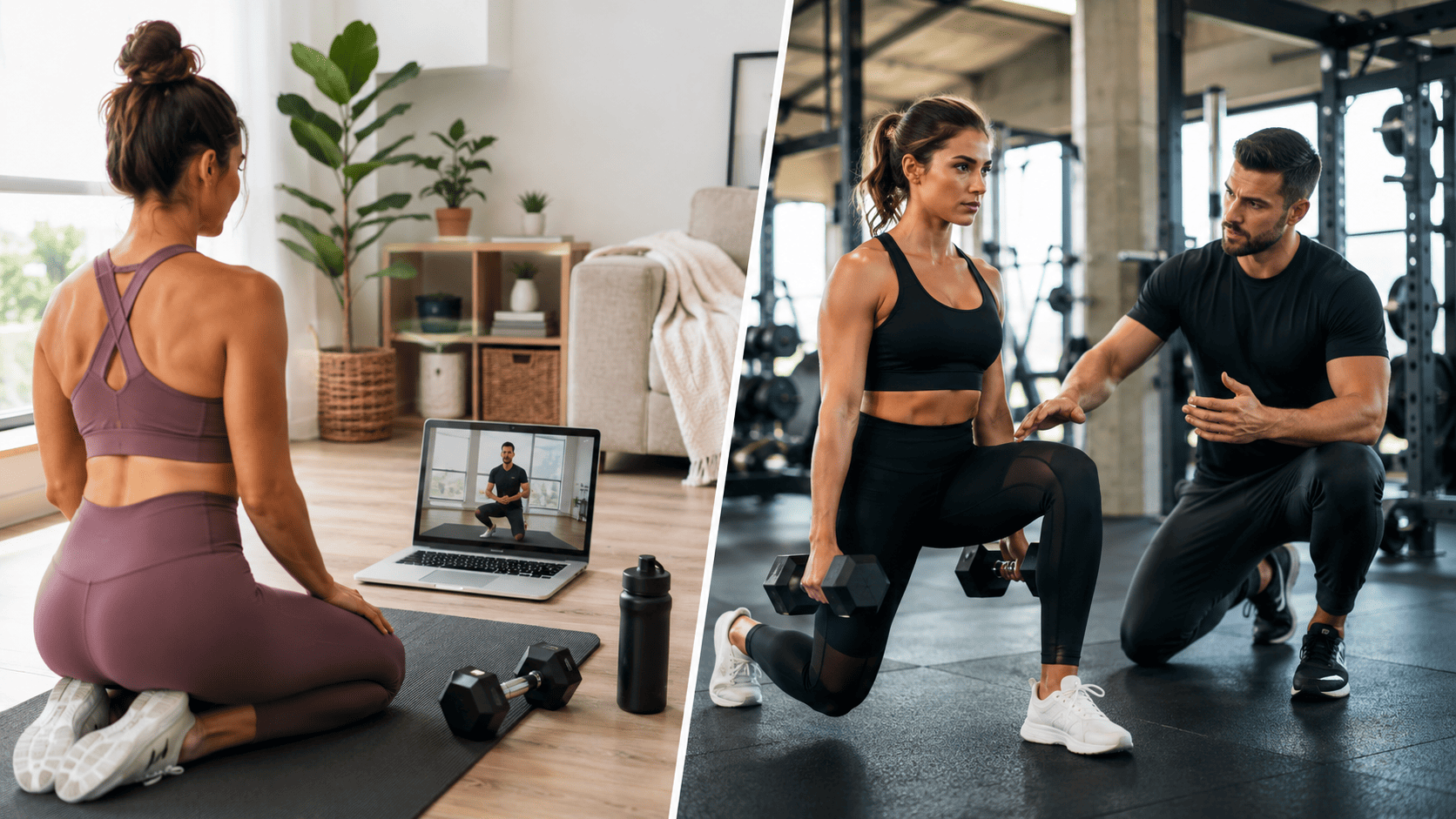
Choosing between an online fitness coach and a personal trainer is not really about picking the better option in the abstract. It is about choosing the support model that fits your goals, schedule, experience level, and the way you actually live.
For some people, in-person training is exactly what they need. Real-time coaching, immediate feedback, and a fixed appointment can make training easier to trust and easier to follow through on. For others, online coaching offers more value because it fits a demanding schedule, allows for more flexibility, and provides guidance that extends beyond a single session.
Ascend sees this question through a practical lens. Coaching should fit real life. It should help you make meaningful progress, not force you into a model that looks good on paper but does not work in the context of your week. That is why the real question is not online fitness coach versus personal trainer. The real question is which one helps you stay consistent and move forward.
Key Takeaways
An online fitness coach usually provides flexible programming, ongoing accountability, and support across your full week.
A personal trainer usually provides live instruction, immediate form correction, and stronger session-by-session structure.
Online coaching often works well for busy adults, independent exercisers, and people who want long-term support at a lower cost.
Personal training often works well for beginners, people who need hands-on guidance, and those who thrive with fixed appointments.
Neither option is automatically better. The right choice depends on your goals, schedule, confidence level, and preferred coaching style.
Some people get the best results from a hybrid approach, starting in person and continuing with online support later.
What Is The Difference Between An Online Fitness Coach And A Personal Trainer?
Both roles can help people get stronger, healthier, and more confident in training. The difference is usually less about whether they care about results and more about how the support is delivered.
A personal trainer typically works with you in person during scheduled sessions. That support is usually centered around the workout itself. A good trainer helps you execute exercises correctly, keeps you focused, and adjusts the session in real time based on what they see.
An online fitness coach usually works across the entire week rather than during one specific hour. That support often includes program design, progress tracking, check-ins, exercise review, and adjustments based on your schedule, recovery, and goals. The coaching relationship tends to be broader and more integrated into everyday training decisions.
What An Online Fitness Coach Typically Does
An online coach usually builds your training plan around your current level, your available equipment, your schedule, and the outcome you care about most. That might mean general fitness, strength, better performance, or more structure in your week.
The best online coaching is not just a spreadsheet with workouts. It includes communication, accountability, and progression. A coach should be helping you understand what to do, why you are doing it, and how to keep moving when life gets busy or training needs to shift.
This is where online coaching can be especially valuable for people who want more than a one-hour workout session. If your goal is to build a sustainable routine, improve performance, or stay consistent through work travel and schedule changes, a well-built program like Ascend’s Personalized Training Program can offer the kind of structure that keeps progress moving.
What A Personal Trainer Typically Does
A personal trainer usually works face to face with you in a gym or studio. That allows them to coach exercise technique in the moment, correct movement errors immediately, and push effort during the session itself.
This model is especially helpful for people who feel unsure in the gym, are very new to exercise, or need direct supervision to feel confident. It also helps people who struggle to get themselves to train unless they have a set time and someone waiting for them.
That said, personal training often becomes more session-based by nature. You get support during the appointment, but not always much outside of it. Some trainers do provide homework, check-ins, and broader accountability, but the in-person model still tends to revolve around scheduled workouts.
Where Online Fitness Coaching Wins
Online coaching is not automatically better, but it does solve a number of problems extremely well. For the right person, it can be more practical, more sustainable, and often more effective over time.
Flexibility And Convenience
If your schedule changes often, online coaching usually has the advantage. You are not trying to coordinate every workout around a trainer’s calendar, commute to a facility, or make one appointment to determine whether the week feels successful.
That flexibility matters more than many people realize. The best plan is usually not the most perfect plan. It is the plan you can actually follow consistently. For busy adults, professionals, parents, and athletes juggling multiple responsibilities, online support often makes training more realistic.
This is a big reason why online coaching works well for people looking for personalized fitness coaching online. It allows the program to fit the athlete, instead of asking the athlete to constantly rearrange life around the program.
More Affordable Ongoing Support
In many cases, online coaching provides more support for the cost. Personal training is often priced by the session, which can become expensive quickly if you want multiple appointments each week.
Online coaching usually spreads support across the month instead. That often includes training design, check-ins, updates, and communication outside workout time.
For people who want guidance on an ongoing basis, that model can create more value without requiring the same financial commitment as repeated in-person sessions.
Affordability matters, but value matters more. Paying less only helps if the support still works. The right online coach should make the program feel personal, responsive, and structured rather than generic and automated.
Coaching Beyond The Workout
This is where online coaching often separates itself. Real progress is rarely about one perfect workout. It is about what happens across the week. It is about consistency, recovery, scheduling, progression, and staying on track when the week goes sideways.
A good online coach helps you navigate all of that. You are not just buying exercise selection. You are getting support with the process of training. For many people, that broader accountability is more useful than a trainer who only sees them once or twice a week.
Where In-Person Personal Training Wins
There are still situations where personal training is the better choice. Good coaching means being honest about that, especially if the goal is not just to sell a service but to help someone choose well.
Real-Time Form Feedback
If you are brand new to exercise, in-person coaching can shorten the learning curve. A trainer can watch your setup, see movement errors immediately, and adjust technique on the spot.
That kind of live correction is valuable when someone needs to build confidence with basic patterns like squatting, hinging, pressing, rowing, or using unfamiliar equipment. Online coaching can still help with form through video review, but it is not exactly the same as having someone right there.
This is especially important for people who feel anxious in the gym or who tend to avoid exercises because they are not sure they are doing them correctly. In-person support can reduce that hesitation early on.
Stronger External Accountability
Some people simply do better when there is a scheduled appointment. They know that if they do not show up, someone is waiting on them. That type of accountability can be powerful, especially in the beginning.
If you struggle to start on your own, a personal trainer can create structure fast. The session is already set. The workout is already planned. You do not have to negotiate with yourself about whether you will get it done.
That kind of accountability is real. It is not weakness to need it. It is just one more factor in choosing the model that gives you the best chance to follow through.
Better For Certain High-Touch Situations
There are situations where hands-on support matters more. Very new exercisers, people coming back after long layoffs, and individuals who want close supervision often benefit from in-person training first.
That does not mean they need it forever. It may simply be the best starting point. Once basic movement quality, confidence, and routine are in place, some people transition well into online coaching and keep progressing from there.
The Real Question: Which One Fits Your Personality And Lifestyle?
This is where most articles stay too general. The right choice is not only about features. It is about fit. A support model can sound great and still be wrong for the person using it.
Choose Online Coaching If...
Online coaching often makes the most sense if you already have some basic exercise confidence, value flexibility, and want guidance that fits into a busy week rather than forcing your week around it.
It is also a strong fit if you travel, train in different environments, or want support that extends beyond one workout at a time. People who like having a plan, appreciate clear communication, and can train independently often do very well with online coaching.
A good example is someone pursuing broader performance goals rather than just random workouts. In that case, a more structured model such as Online Strength Coaching can offer clear progression without the limits of session-only support.
Choose A Personal Trainer If...
A personal trainer may be the better choice if you are very new, need live correction, or know that fixed appointments are what keep you engaged. If you need someone physically present to coach movement and keep you focused, that matters.
It is also a good fit for people who want the gym to feel less intimidating right away. Confidence is part of progress, and sometimes face to face guidance is the fastest way to build it.
Choose A Hybrid Model If...
For some people, the smartest choice is not either-or. It is both, at different times. You might start with a personal trainer to build movement confidence, then move into online coaching for longer-term progression and flexibility.
You might also use online coaching as your base and book occasional in-person sessions when you want a technique tune-up. This can work especially well for athletes who want autonomy without losing access to hands-on feedback when it is useful.
Online Fitness Coach Vs. Personal Trainer By Goal
The best option also depends on what you are trying to accomplish. Different goals place different demands on the coaching relationship.
For Weight Loss
Both can work. The deciding factor is often what kind of accountability you need most. If your biggest challenge is showing up to exercise at all, in-person sessions may help. If your biggest challenge is sustaining habits across the whole week, online coaching often fits better.
Weight loss usually depends on more than one workout hour. It depends on consistency, routine, recovery, and the ability to adapt when life gets messy. That is why broad support often matters.
For Strength And Muscle Gain
Again, both can work well. If you are new to lifting and need help building confidence with technique, a personal trainer can be a strong entry point. If you already know the basics, online coaching can be excellent for long-term progression.
For athletes or lifters who want structure rather than random gym sessions, individualized programming often matters more than whether the coach is standing next to them in real time.
For Busy Professionals
Online coaching usually has the edge here. Busy people do not just need motivation. They need a system that survives meetings, travel, family demands, and fluctuating energy.
That is one reason why Ascend’s broader sports performance training and fitness coaching model speaks to everyday athletes balancing real life. The plan has to be strong, but it also has to be adaptable.
For Beginners
Beginners often benefit from in-person support early, especially if they feel unsure about movement. But online coaching can still work if the onboarding is thorough, the exercise guidance is clear, and the communication is strong.
The key is not whether someone is a beginner. The key is whether the coaching model provides enough clarity and support for that beginner to succeed.
What Makes Online Coaching Actually Effective?
This is where a lot of people misunderstand online coaching. They assume it works only for highly motivated people who already know what they are doing. In reality, online coaching works when the system is built well.
A strong online coaching experience usually includes:
Clear, individualized programming
Regular check-ins and progress review
Timely adjustments when life or training changes
Coaching that responds to the athlete, not just the calendar
Accountability that extends beyond a single workout
That is why not all online coaching is equal. A generic app is not the same as real coaching. A coach should be paying attention, making decisions, and helping you build momentum over time.
For people who want a lower-pressure entry point before committing to a full program, something like The Ascend Activation Session can also help clarify goals and direction before stepping into a larger training relationship.

How Ascend’s Online Coaching Model Differs From Session-Based Training
Ascend focus is not just on delivering workouts. It is on helping everyday athletes train with purpose and progress with structure. That means coaching is built around the person, not just the session.
Our approach is collaborative. We look at goals, current capacity, schedule, and long-term direction. Then we create a plan that fits the athlete’s real life and supports meaningful progress over time. That model often works well for people who need more than motivation in the moment. They need a system they can trust across the full week.
This is similar to how our Climbing Coaching Program supports dedicated climbers through structured progression, feedback, and ongoing communication. The same broader philosophy applies to general fitness and performance work. Better coaching is not just about what happens during one training hour. It is about how the whole process is guided.
How To Choose The Right Coach Or Trainer
Before hiring either one, ask better questions. A polished website or social media feed does not tell you enough about what the coaching experience will actually feel like.
Ask about communication. Ask how the program is adjusted when life gets busy. Ask what accountability looks like in practice. Ask how they work with people at your level, with your goals, and with your schedule.
Also ask whether the coach or trainer is trying to fit you into their system, or whether they are building the system around you. That difference matters more than most people think. Good coaching should create clarity, not friction.
Conclusion
Online fitness coaching and personal training can both be effective. Neither one wins by default. The better choice is the one that fits your current needs, your personality, your schedule, and the kind of accountability that helps you follow through.
If you need live instruction, direct correction, and external structure, a personal trainer may be the right move right now. If you want flexibility, individualized programming, and support that extends beyond the workout itself, online coaching may be the stronger fit.
The label matters less than the quality of the relationship. Good coaching should help you train with more confidence, more consistency, and more purpose. That is the standard worth looking for.
FAQs
What Is The Difference Between An Online Fitness Coach And A Personal Trainer?
An online fitness coach usually supports your training across the full week with programming, check-ins, and progress review. A personal trainer usually works with you in person during scheduled sessions and provides real-time exercise coaching.
Is An Online Fitness Coach Cheaper Than A Personal Trainer?
Often, yes. Online coaching is usually more affordable on a monthly basis than paying for multiple in-person sessions each week. The real question, though, is whether the support matches your needs.
Can An Online Fitness Coach Help With Form?
Yes, especially through exercise demonstrations, video review, and feedback. It is different from live in-person correction, but strong online coaching can still improve form and movement quality significantly.
Is Online Fitness Coaching Good For Beginners?
It can be, if the coaching is clear, responsive, and well structured. Some beginners still do better starting with in-person training, especially if they feel very unsure with exercise technique.
Do Online Fitness Coaches Really Work?
Yes, when the coaching is individualized and supported by real communication, accountability, and progression. The quality of the system matters much more than the delivery format alone.
Should I Start With A Personal Trainer And Move Online Later?
For many people, that is a smart progression. In-person training can build confidence early, and online coaching can then provide more flexibility and longer-term structure.
Which Is Better For Busy Professionals?
Online coaching is often the better fit because it allows more flexibility and supports consistency across a changing schedule. That usually matters more than having one fixed session each week.
What Should I Look For Before Hiring Either One?
Look for qualifications, communication quality, personalization, and a coaching style that fits your goals and daily life. The best coach or trainer is the one whose support model actually helps you stay consistent.
