
Hand & Skin Care For Rock Climbing
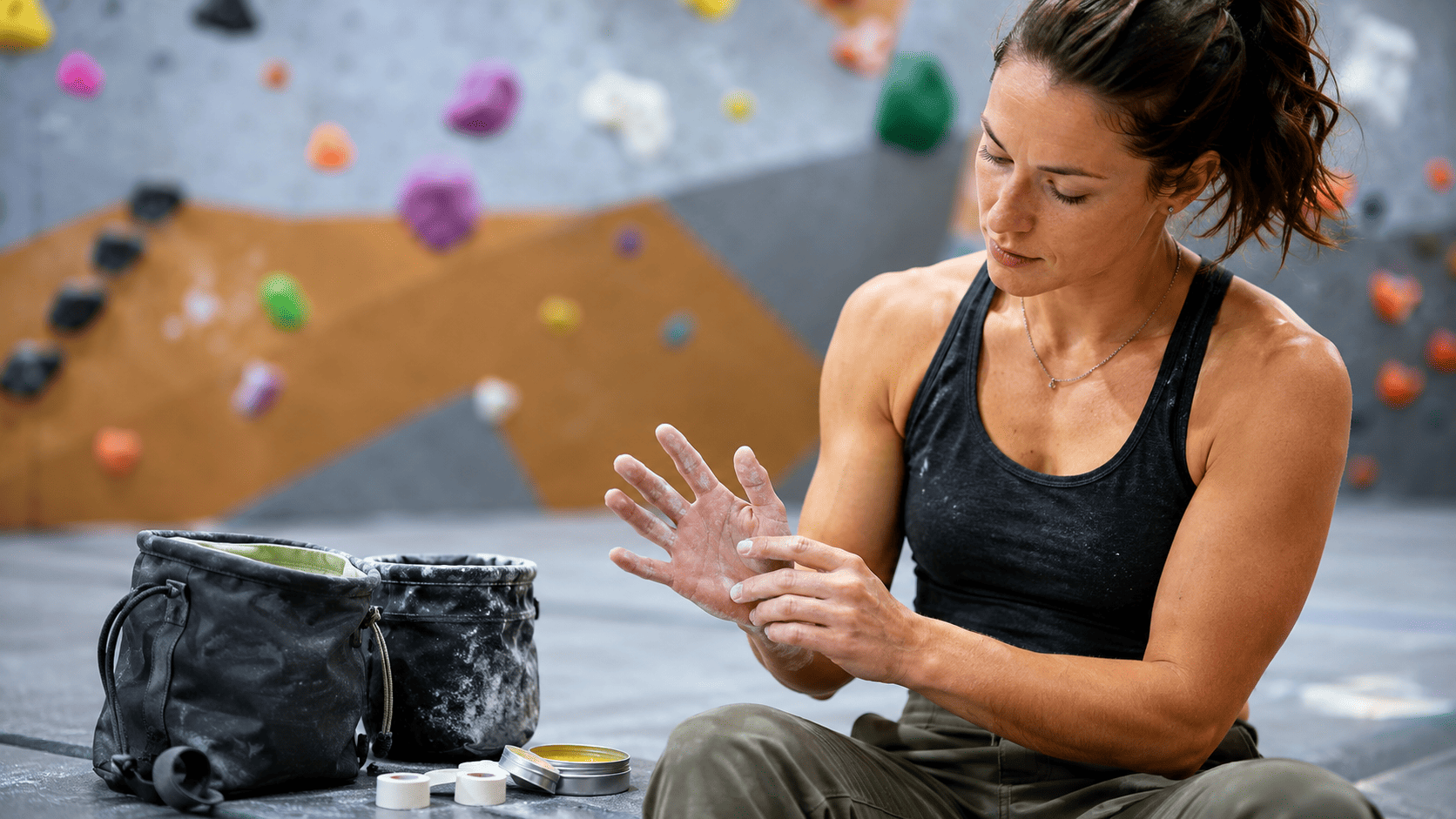
In climbing, skin is often the first thing to fail. Not your pulling strength. Not your fitness. Not your mindset. Your skin. A strong session can come to an end because your tips are too thin, a callus catches and tears, or your hands get so dry that friction disappears when you need it most.
That is why hand care is not a side topic for climbers. It is part of performance. Good skin lets you pull with confidence, trust friction, and stay consistent across sessions. Poor skin care shortens sessions, ruins projecting days, and turns avoidable damage into lost training time.
Why Hand And Skin Care Matter In Climbing
Climbing asks a lot from a very small surface area. Your fingertips and palms have to produce friction, tolerate pressure, and keep working through repeated attempts on rough holds, sharp rock, wooden boards, and gym textures that can wear skin down fast. When the skin is off, the whole system suffers.
The best climbers know this. They do not wait until they have a flapper or a split tip to start paying attention. They manage the small issues early, keep their skin in a good range, and make decisions based on what their hands are telling them.
This matters even more for everyday athletes. If you only have a few climbing sessions each week, losing one to bad skin is a bigger deal. Smart skin care helps you protect the quality of the sessions you do have.
What Good Climbing Skin Actually Looks Like
A lot of newer climbers think good skin means thick skin. That is only half true. You do want durable skin, but not bulky, raised, or brittle skin. Thick calluses that protrude from the hand often become liabilities because they catch on holds and tear.
Good climbing skin is better described as tough, smooth, and pliable. It has enough durability to handle friction, but enough elasticity that it does not crack under stress. It is dry enough to grip well, but not so dry that it feels glassy or fragile.
That balance is the target. Too much moisture and you feel slick. Too little and the skin becomes rigid and split-prone. Strong skin care is really about managing that balance over time, not chasing one extreme.
The Three Pillars Of Climbing Hand Care
If you want a simple way to think about skin care, it comes down to three things: moisture management, callus management, and fast injury care. Most hand problems in climbing can be traced back to one of those areas getting ignored.
Moisture Management
Moisture affects friction more than many climbers realize. Sweaty hands reduce grip and make holds feel less secure, especially on warm days or during longer projecting sessions. On the other side, over-dried hands can become thin, glassy, and much more likely to split.
That is why skin care is not just about drying your hands as much as possible. Chalk is useful, but over-chalking can work against you. The best skin usually sits in the middle: dry enough for friction, hydrated enough to stay resilient.
Smooth, Durable Calluses
Calluses are not the enemy. They are part of adaptation. But uneven, raised, or sharp-edged calluses are problems waiting to happen. A callus that sticks up from the hand has a much better chance of catching and turning into a flapper on the next hard move.
Managing calluses is not vanity. It is prevention. A little filing on rest days or after washing your hands can keep the skin surface smooth, which makes it far less likely to tear under load.
Fast Injury Management
Small problems get big quickly if you ignore them. A hot spot becomes a worn patch. A worn patch becomes a split. A raised edge becomes a flapper. Climbers who stay consistent are usually the ones who deal with these things early instead of trying to force one more attempt.
The goal is not to overreact to every minor issue. It is to be honest about what the skin can handle and respond before the damage takes over the session.
Know Your Skin Type Before You Fix It
A big mistake in climbing skin care is using the same solution for every problem. Dry, splitting skin needs a different approach than sweaty tips. Thin, worn-down skin needs a different response than thick calluses. If you do not know what kind of issue you have, it is easy to make it worse.
Dry, Cracking, Split-Prone Skin
If your skin feels rough, stiff, or prone to cracking, the answer is usually not more chalk and more friction. Dry skin often needs better recovery care, less aggressive washing, and more consistent moisturizing away from sessions.
This type of skin can feel decent at the start of a session, then suddenly fail once the surface gets stressed. Climbers with drier hands usually do better when they treat hydration as part of their rest-day routine, not an emergency fix after the skin has already split.
Sweaty Hands Or Sweaty Tips
Sweaty skin creates a different problem. The hands may feel soft, slippery, or inconsistent, especially in warm gyms or humid outdoor conditions. In these cases, chalk choice, liquid chalk, and sweat-control strategies matter more.
The mistake here is going too aggressive with drying products until the skin swings from too sweaty to too brittle. The goal is better control, not total shutdown. You want friction without destroying the skin surface.
Thin Or Glassy Skin
This is common after high-volume sessions, trip days, or repeated board climbing. The skin starts to feel shiny, tender, and overly sensitive. It may not be torn yet, but you can tell it is close.
When you reach this point, the right move is often to back off. Not because you are mentally soft, but because skin damage has a cost. Thin skin rarely improves if you keep forcing it.
Before-Climbing Hand Care
Good hand care starts before the session, not after something goes wrong. A quick check of your hands can tell you a lot about how hard you should push and where the risks are.
Wash, Check, And Clean Up Small Problems
If there is old chalk, dirt, or leftover residue on the skin, wash it off and look closely at your hands. Check for raised calluses, tiny cracks, rough edges, or tips that already feel close to failure.
If you spot a snag, file it lightly before it catches. If a nail is too long, trim it. Small maintenance before climbing is much better than dealing with a preventable tear in the middle of a session.
Moisturize Strategically
Some climbers do well with a small amount of moisturizer well before a session, especially if their skin runs dry. The timing matters. You do not want greasy hands right before climbing, but you also do not want to show up with skin that has been chalk-dried for days.
Think of moisturizer as part of skin preparation, not something that automatically makes you soft. Healthy skin usually climbs better than neglected skin.
During-Climbing Skin Management
The best climbers keep paying attention to their skin while they climb. They do not just warm up, start trying hard, and hope for the best. They notice how the skin feels, how fast it is wearing down, and whether the current strategy is still working.
Chalk Strategy Matters
Chalk is useful, but more is not always better. Too much chalk can cake on the skin, dry it out excessively, and reduce the quality of contact. Too little and the hands stay damp. The right amount depends on your skin, the environment, and the type of climbing.
Liquid chalk can work well for climbers who struggle with sweat, especially at the gym or on warm days. Loose chalk gives more flexibility throughout the session. What matters most is using chalk as a tool, not as an automatic habit every thirty seconds.
Pay Attention To Skin Feedback
There is a point in many sessions where the skin starts telling the truth. The fingertips feel hot. The surface starts getting glassy. A spot on the palm feels ready to catch. A tip starts stinging on certain holds. That is useful information.
Ignoring those signals is how small damage becomes bigger damage. Sometimes the right move is changing angles, switching climbs, or ending the hard portion of the session. Smart climbers do not confuse discipline with denial.
File And Tape When Needed
If a small ridge develops during the session, file it immediately. It takes very little time and can prevent a much bigger problem. If an area is vulnerable but still climbable, light taping can help protect it.
Tape is useful, but it is not magic. It can protect skin and buy you a little room, but it does not fully replace healthy tissue. Use it to manage smartly, not to pretend the hand is fine when it clearly is not.
After-Climbing And Rest-Day Skin Care
A lot of real progress in skin care happens after the session. Chalk left on the hands keeps drying the skin long after climbing ends. Small edges stay rough if you never smooth them. Dry skin keeps getting drier if recovery care is inconsistent.
Wash Off Chalk And Restore Moisture
Once the session is over, wash your hands. That simple habit matters more than many climbers think. Chalk is useful while climbing, but terrible to leave sitting on the skin all evening.
After washing, use a hand balm, restorative cream, or fast-absorbing moisturizer. The best time is usually later in the day or before bed, when the skin has time to recover without needing immediate friction.
Maintain Calluses On Rest Days
Rest days are the best time to file calluses lightly and keep the surface smooth. This should not be aggressive. You are not trying to remove all adaptation. You are trying to level down the ridges and prevent raised areas from becoming tear points.
If you stay consistent with this, you usually need much less intervention later. Small maintenance goes a long way.
How To Treat Common Climbing Skin Injuries
Even with good habits, skin injuries happen. When they do, how you respond matters. Quick, clean treatment usually leads to faster recovery and less disruption.
Flappers
If a callus tears and creates a flapper, clean the area first. Depending on the tear, you may carefully trim dead skin or press the flap down and tape it securely if it can still protect the wound. Either way, hygiene matters.
A flapper is often the end of quality climbing for that hand. You may still be able to move around, but hard pulling through it usually creates a worse problem. Sometimes the smartest move is simply calling the session.
Split Tips
Split tips are frustrating because they can seem small while feeling terrible on the wall. Clean the area, file down any sharp edges, and protect it as it heals. Temporary coverage may help, but split tips usually respond best to time, cleanliness, and keeping the skin from drying out further.
Trying to climb hard through a fingertip split is rarely worth it. The cost usually outlasts the reward.
Worn-Down Tips And Raw Skin
This is common after long gym sessions, board climbing, or days outside on rough rock. The skin is not torn, but it is too thin to keep going well. In this case, basic wound care, moisture, and rest are the best tools.
Raw skin is a recovery issue, not a toughness test. If you want the next session to matter, protect the hands now.
Gym Skin Vs Outdoor Skin
Indoor and outdoor climbing stress the hands differently. Gyms often create more repetitive wear because you can take many attempts in a controlled setting, especially on steep terrain or spray walls. The volume adds up quickly.
Outdoor climbing can be harsher in a different way. Rock texture, weather, and projecting patterns can destroy skin faster, especially on sharp stone or dry conditions. Outdoor sessions usually demand more pacing because once the skin starts to go, it can go fast.
Board sessions deserve special mention too. They are excellent for strength and movement, but they can be brutal on skin. If you train on boards regularly, skin care has to be part of the plan.
A Simple Climbing Skin Kit
You do not need a huge setup, but a few basics help a lot:
Fine skin file or sandpaper
Nail clippers
Athletic tape
Hand balm or climbing salve
Liquid chalk if sweat is an issue
Small bandages or basic wound care items
The goal is not to carry a pharmacy. It is to have enough tools to handle small problems before they become bigger ones.
How Ascend Approaches Hand Care For Consistent Climbing
Skin care is part of staying ready to train at Ascend. It is not just about comfort. It is about keeping session quality high, protecting consistency, and making better decisions before damage starts taking away from progress.
That means managing calluses before they tear, restoring moisture before the skin becomes brittle, and being honest enough to stop when the hand is done. Climbers who train with purpose do not just track strength and movement. They respect recovery and the small details that keep them on the wall.
Healthy skin will not replace good climbing. But it does make good climbing easier to express, more repeatable, and more sustainable over time.
FAQs
How Do You Take Care Of Your Hands When Rock Climbing?
Wash chalk off after sessions, file raised calluses, moisturize on rest days, and treat small damage early. Good hand care is mostly about consistency and paying attention before a minor issue becomes a tear.
What Do Rock Climbers Use On Their Hands?
Most climbers use chalk during sessions, along with tape, a skin file, nail clippers, and some kind of balm or restorative cream for recovery. Some also use liquid chalk or sweat-control products if they struggle with sweaty hands.
How Do You Make Hand Skin Stronger For Climbing?
You make it stronger by climbing consistently, managing calluses, keeping the skin healthy, and avoiding the cycle of over-drying and tearing. Strong climbing skin is durable and smooth, not bulky and neglected.
Should Rock Climbers Use Hand Cream?
Yes, usually away from sessions. Hand cream or balm can help restore moisture and keep the skin pliable, which reduces cracking and splitting. The key is using it at the right time, not right before you need maximum friction.
Should You File Calluses For Climbing?
Yes. Light filing helps keep calluses smooth and level so they are less likely to catch and tear. The goal is maintenance, not removing all the skin your hands have built.
When Should You Stop A Session Because Of Skin Damage?
Stop or scale back when the skin feels thin, shiny, hot, raw, or close to tearing. If a flapper, split, or worn tip is changing how you climb, that is usually a sign the cost of continuing is too high.
