
How To Choose A Chalk For Rock Climbing
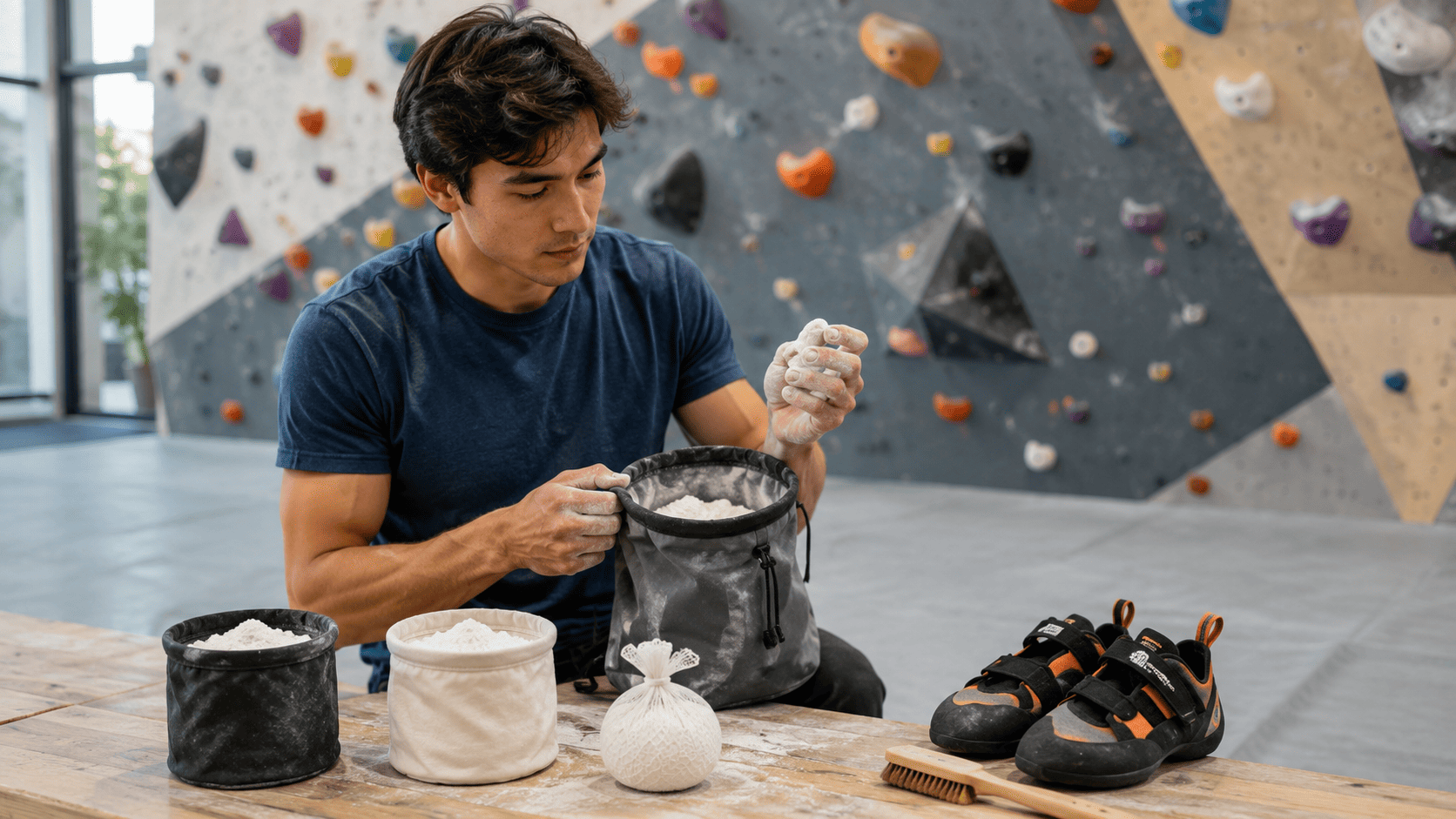
Chalk seems simple until you actually start climbing regularly. Then you realize not all chalk feels the same, not all chalk behaves the same, and not every type works equally well for every climber, gym, or crag. What looks like a small gear choice can quietly affect confidence, friction, skin condition, and how steady your hands feel over a full session.
The good news is that choosing chalk does not need to be complicated. You do not need to chase hype, buy the most expensive option, or assume the same chalk your strongest friend uses will automatically be right for you. The best chalk is the one that matches your skin, your style of climbing, and the environment you spend the most time in.
At Ascend, we look at chalk the same way we look at training: choose the tool that solves the actual problem. If your hands sweat heavily, that points you one direction. If your skin runs dry and splits easily, that points you another. Once you understand that framework, buying chalk gets much easier.
What Climbing Chalk Actually Does
Climbing chalk is mostly magnesium carbonate. Its main job is to manage moisture on your skin so your hands feel drier and more stable on the hold. It is not glue, and it does not create friction out of nowhere. What it does is reduce the sweat and slickness that make good contact harder to maintain.
That is why chalk can feel so different depending on the day. On a humid day, or when your body temperature is high, you may feel like you need more support from your chalk. On a cool day with dry air, too much chalk can actually make your skin feel worse by over-drying it and creating that glassy, unhelpful feel climbers know well.
So the goal is not to use the most chalk possible. The goal is to use the right kind, in the right amount, for the conditions in front of you.
Start With Your Skin Type
If you want to choose chalk well, start with your hands. Most climbers fall into one of three broad categories: sweaty, dry, or mixed depending on the season, venue, or session. That matters more than branding.
If Your Hands Run Sweaty
If your hands sweat quickly, you usually need chalk that dries well and stays effective longer. This is where liquid chalk often helps, especially as a base layer before the session starts. It can create a more durable dry layer that does not disappear the moment the climbing gets hard.
Sweaty-handed climbers also tend to do well with loose chalk that reapplies quickly between attempts. In warm gyms, humid conditions, or hard bouldering sessions where the intensity stays high, that quick reset matters.
If Your Skin Runs Dry
Dry skin changes the equation. If your hands already feel dry, overly aggressive chalk can make them worse. That can lead to splits, glassy tips, and a feeling that the skin is present but not actually performing. In that case, purer chalks with fewer aggressive drying effects often feel better.
Dry-skinned climbers usually benefit from using less chalk, being more selective with liquid chalk, and paying closer attention to skin care between sessions. Better friction does not always come from more drying. Sometimes it comes from not overdoing it.
If Your Skin Changes By Session
A lot of climbers are not just one type. Your hands may feel dry outside in cool weather and sweaty indoors under bright gym lights. They may behave differently in summer than in winter, or on long route days compared with short powerful sessions.
That is why the best setup is not always one single chalk for every scenario. Many climbers end up with a primary choice plus a second option for different seasons or venues. That is not overthinking it. That is just paying attention.
The Main Types Of Climbing Chalk
Once you know what your skin tends to do, the next step is understanding the main forms of chalk and what each one does well.
Loose Chalk
Loose chalk is the most common all-around choice. It is easy to apply, easy to reapply, and available in textures ranging from very fine powder to chunkier blends. It works well for both indoor and outdoor climbing and is usually the most straightforward starting point for beginners.
Its biggest advantage is speed. You can chalk up quickly, get decent coverage, and adjust throughout the session. Its biggest downside is mess. Loose chalk produces more dust, and in some gyms that matters.
Block Chalk
Block chalk is simple and underrated. It starts as a solid block, and you can crush it to the texture you like. Some climbers prefer that because it gives them more control over how fine or chunky the chalk becomes.
It is also often cost-effective and easy to store before crushing. If you like dialing in your own feel rather than buying a pre-mixed texture, block chalk can be a smart option.
Liquid Chalk
Liquid chalk is usually alcohol-based. You rub it into your hands, let it dry, and it leaves a chalk layer behind. It is especially useful for climbers with sweaty hands, indoor climbers dealing with gym dust policies, and anyone who wants a more durable base before starting the session.
The tradeoff is that it can dry the skin out more aggressively, and it is not as easy to reapply mid-burn as loose chalk. For many climbers, though, liquid chalk works best not as a replacement for loose chalk, but as the first layer under it.
Chalk Balls
Chalk balls are exactly what they sound like: fabric balls filled with chalk that let you apply a controlled amount with less mess. They are especially useful in gyms that want to reduce airborne chalk dust.
The main benefit is control. The limitation is coverage. If you like a heavy coat of chalk quickly, a chalk ball may feel slow or too light, especially during harder projecting sessions.
Eco And Lower-Impact Options
Some climbers also choose color-matched, lower-visibility, or eco-focused options, particularly outdoors. These choices make sense in areas where visual impact matters or where local ethics favor less obvious chalk use.
This is not just a preference issue. Sometimes the best chalk is the one that supports your climbing without leaving unnecessary marks all over the feature you came to respect.
How Texture Changes The Feel
Texture matters more than many climbers realize. Fine chalk coats the hands quickly and feels immediate. Chunkier chalk often feels a little slower at first, but many climbers like the way it breaks down and creates texture during a session.
Neither is automatically better. Fine chalk often feels efficient and clean. Chunky chalk can feel more tactile and satisfying, especially outdoors or on harder sessions where climbers want more control over how the layer builds on the skin.
This is one of the more personal parts of the decision. The important thing is to notice whether the chalk helps your skin feel stable and useful, not just dry.
How To Choose Chalk Based On Where And How You Climb
Chalk choice should change with context. A setup that works for gym bouldering may not be the best one for long sport routes or full days outside.
Indoor Gym Climbing
Indoor climbing often rewards cleaner, lower-dust options. Many gyms prefer liquid chalk, chalk balls, or at least a lighter hand with loose chalk. If you mostly climb indoors, especially in a crowded space, that is worth respecting.
For gym climbers, liquid chalk as a base with small loose top-ups can be a great balance. It keeps the mess down while still giving you flexibility during the session.
Outdoor Bouldering
Outdoor bouldering usually favors speed and access. You want chalk that is easy to apply between attempts and easy to trust when the move matters. Loose or chunky chalk tends to work well here, especially when friction and quick resets are priorities.
The key outdoors is not just performance. It is also restraint. Use what you need, brush your holds, and avoid turning every sequence into a white outline.
Sport Climbing And Long Routes
Longer roped climbing creates different demands. You may want chalk that stays effective without destroying your skin over a full session. Liquid chalk can help as a base layer, while loose chalk makes sense for easy reapplication at the belay or before another burn.
For route climbers, durability matters, but so does feel. The best option is often the one that keeps your hands consistent from the first bolt to the last crux, not the one that feels the driest in the opening moves.
Trad And Long Days Outside
On long days outside, practicality matters. You want something portable, simple, and easy to manage without creating unnecessary mess. Loose chalk or block chalk often makes sense here, especially when you are climbing for hours and want something dependable rather than fussy.
Trad climbers also tend to appreciate systems that are easy on the skin. When the day is long, skin management matters just as much as grip.
Loose Chalk Vs Liquid Chalk
This is one of the biggest choice points for climbers, and the answer is not one-size-fits-all.
When Loose Chalk Wins
Loose chalk wins when you want fast reapplication, a familiar feel, and maximum flexibility throughout the session. It is especially useful for bouldering, projecting, and any climbing where you want to reset your hands quickly and often.
It is also the easiest place to start. If you are new to climbing, loose chalk is usually the most forgiving and versatile option.
When Liquid Chalk Wins
Liquid chalk wins when sweaty hands, dust control, or longer-lasting dryness are the priority. It is especially effective indoors, in humid conditions, or for climbers whose hands sweat enough that normal chalk seems to vanish immediately.
It also gives a more uniform starting layer, which many climbers find helpful before hard efforts.
When Using Both Makes Sense
For many climbers, the best answer is both. Liquid chalk goes on first as a base. Loose chalk handles the top-ups. That combination works especially well for sweaty hands, long sessions, humid gyms, and performance days where consistency matters.
This is not about buying more products for the sake of it. It is about using each type where it works best.
What To Look For In A High-Quality Chalk
Good chalk should feel consistent, absorb moisture well, and leave your hands better, not worse. High-purity magnesium carbonate is generally what climbers want. Excessive fillers and gimmicky additives rarely improve performance in a meaningful way.
Texture also matters. Some climbers want a fine, quick coat. Others prefer more chunk. Neither is wrong, but inconsistency is a problem. If the chalk feels different every session, it is harder to trust.
The biggest mistake here is assuming price equals performance. Sometimes it does. Often it does not. What matters most is how the chalk behaves on your skin in your climbing environment.
Chalk, Skin Care, And Performance
Skin condition is part of performance. Great chalk on damaged skin still leads to poor contact. If your hands split easily, get glassy, or feel raw after frequent liquid chalk use, that is not something to ignore.
Climbers with dry skin usually need to be more conservative with aggressive drying products and more consistent with post-session skin care. Climbers with sweaty hands need enough drying support, but still benefit from paying attention to skin wear instead of dumping more chalk on every problem.
Too much chalk can also reduce friction. If your hands feel over-coated and slippery, that is usually a sign to reset, brush off, and start fresh rather than keep piling more on.
Gym Rules, Outdoor Ethics, And Brushing Holds
Good chalk use is also good climbing etiquette. Indoors, respect the gym’s dust policies. Outdoors, respect the rock, the local ethics, and the climbers around you. Use only what you need, clean up visible tick marks, and brush your holds when appropriate.
This matters even more in areas where chalk marks are visually obvious or where local access depends on climbers showing restraint. Performance and respect should not be in conflict.
Rosin-based products or anything that leaves extra residue deserve extra caution outdoors. In most cases, simple magnesium carbonate and good habits are enough.
How Ascend Thinks About Chalk Choice
At Ascend, we see chalk as a small detail that can still affect confidence and consistency in a meaningful way. It is not the most important part of your climbing, but it is one of those variables that is worth getting right because it supports how you perform.
The right chalk is the one that helps you trust your grip, manage your skin, and stay steady in the environment where you climb most. That might be loose chalk. It might be liquid chalk with light top-ups. It might be a simple gym-friendly chalk ball. The answer depends on the athlete, not the marketing.
Start simple. Test one setup honestly. Pay attention to your skin, your venue, and how often you feel the need to reapply. That usually tells you more than any label on the package.
A Simple Chalk Buying Framework
If you want a straightforward way to decide, ask yourself four questions:
Do my hands run sweaty, dry, or mixed?
Am I mostly climbing indoors or outdoors?
Do I want less mess or faster reapplication?
Do I need one chalk, or would a layered setup work better?
If you sweat a lot and climb indoors, start with liquid chalk plus a little loose chalk. If your skin runs dry and you climb outside often, a simpler loose or block chalk may feel better. If you are new and mostly climbing in a gym, loose chalk or a chalk ball is usually enough to get started without overcomplicating things.
FAQs
What Type Of Chalk Is Best For Rock Climbing?
The best chalk depends on your skin, climbing style, and environment. Loose chalk is the best all-around starting point, while liquid chalk often works well for sweaty hands or indoor use.
Is Liquid Chalk Or Loose Chalk Better For Climbing?
Neither is always better. Loose chalk is easier to reapply and works well for most climbers. Liquid chalk lasts longer and helps with sweat control, especially indoors.
What Climbing Chalk Is Best For Sweaty Hands?
Climbers with sweaty hands often do well with liquid chalk as a base layer and loose chalk for top-ups. That combination helps manage moisture without relying on constant reapplication.
Are Chalk Balls Better For Gyms?
They can be. Chalk balls reduce dust and keep application more controlled, which makes them a good fit for many indoor gyms.
Does Liquid Chalk Dry Out Your Skin?
It can. Because it is usually alcohol-based, liquid chalk may dry the skin more than loose chalk, especially with frequent use.
Is Block Chalk Better Than Loose Chalk?
Not automatically. Block chalk is useful if you want to control texture yourself and often offers good value, but loose chalk is more convenient for many climbers.
Does Too Much Chalk Reduce Friction?
Yes. Over-chalking can leave the skin over-coated and less useful on the hold. Often the better move is to brush off and reapply lightly.
What Chalk Should Beginners Buy?
For most beginners, a simple loose chalk or chalk ball is enough. Start there, pay attention to how your skin responds, and adjust if needed.
